You’ve got the cigar. You’ve got the lighter. Maybe you’ve even got a drink in hand.
But before you light up, there’s one move that separates the confident smoker from the guy mangling his cigar at the table — the cut.
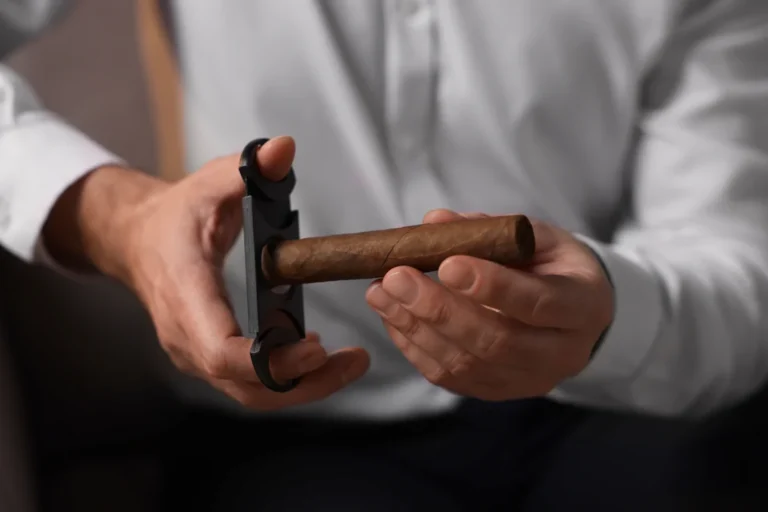
Cutting a cigar isn’t complicated, but doing it wrong can ruin a good smoke in seconds. This guide will show you how to cut a cigar the right way, what tools to use, and how to look like you’ve done it a hundred times — even if it’s your first.
A clean cut does two things that make or break your experience:
Cigars are built with precision — layers of tobacco rolled for the perfect burn and airflow. The cut is what opens that system up. Think of it like popping a cork: anyone can open a bottle of wine, but doing it smoothly shows you know what you’re doing.
There’s more than one way to cut a cigar — and each has its place. Here are the three most common styles and when to use them.
What it is: The classic. A double-blade guillotine cutter slices off the cap in one quick motion.
Best for: Almost every cigar shape — especially Parejos (straight-sided cigars like Robustos and Toros).
How to straight cut a cigar right:
Burton Tip: Think confidence, not force. It’s a cut, not a reenactment of the French Revolution.
What it is: A small circular punch that removes just a bit of the cap.
Best for: Thicker cigars like Gordos or Churchills, where you want to control airflow.
How to punch cut a cigar right:
Why you’ll like it: The punch delivers a concentrated draw with strong flavor and minimal mess. Plus, punch cutters are small, portable, and often double as keychain tools — practical and slick.
What it is: A cutter that carves a V-shaped notch into the cap instead of removing the whole top.
Best for: Medium-to-large cigars; especially good for those who want a full draw without overexposing the filler.
How to V-cut a cigar right:
Burton Tip: The V-cut is the middle ground between straight and punch — smooth airflow, rich flavor, and a refined look.
Most cigars you’ll smoke are straight-sided, but some — like torpedoes and perfectos — taper or close off at one end. These shapes look impressive but require a slightly different approach when cutting.
Torpedos taper to a point, and that pointed tip helps focus the smoke and flavor. You’ll want to clip just the very end — about an eighth of an inch — to open the draw without losing the cigar’s shape.
If the draw feels too tight, trim a little more, one small cut at a time.
Burton Tip: Less is more. A small, clean cut keeps the torpedo’s signature taper intact and gives you a smooth, controlled draw.
Perfectos are closed at both ends, meaning you’ll need to clip the tip and lightly toast the foot before lighting. Once you start to smoke, the heat will open the foot naturally, giving you that signature slow, evolving burn.
Burton Tip: Don’t overcut — part of a perfecto’s charm is how the flavor unfolds as it opens up.
Every cigar smoker has botched a cut at least once. Here’s how to skip the rookie stage entirely:
This part’s less about technique and more about confidence.
Do Use:
Avoid:
If you’re still getting your technique down, our Burton Variety Packs are perfect for practice. You’ll get a mix of cigar sizes and wrapper types — ideal for testing straight, punch, and V-cuts to see which fits your style.
Each pack comes with:
Every great cigar starts with one clean cut.
So grab your cutter, pour your drink, and light up like you’ve been doing it for years — because now, you know how.
What’s your go-to cut style — straight, punch, or V? Drop your answer (and your best rookie story) in the comments below.
Best cigars.
Lowest prices.
Free shipping always.
That’s the Burton Guarantee.
© 2025 Burton Cigar Company. All rights reserved.