Cigar Terminology for Beginners

Table of Contents

Cigar Terminology for Beginners

Burton’s No-Nonsense Guide to Get You Started

So, you want to get into cigars, but every time you hear a seasoned smoker talk about “binders,” “torpedoes,” or “Maduro wrappers,” it feels like they’re speaking another language? Welcome, soon-to-be cigar aficionado. This guide is for you.

Cigars have a long history and a culture of their own, but getting started doesn’t have to be intimidating. Whether you’re picking up your first stick or just trying to understand what you’re buying, let’s break down the essential cigar terminology in plain English.

The Basics: What Makes a Cigar a Cigar?

Before we get into the fancy terms, let’s talk about the three main parts of a cigar:

  • Wrapper – The outermost leaf. It’s the first thing you see and plays a big role in flavor.
  • Binder – The layer beneath the wrapper that holds everything together.
  • Filler – The tobacco inside the cigar that determines most of its strength and complexity.

Think of a cigar like a burrito: the wrapper is the tortilla, the binder is the melty cheese that keeps it all together, and the filler is the meat and rice inside.

Cigar Shapes & Sizes: It’s Not Just About Looks

Cigars come in different shapes and sizes, and while that might seem like a purely aesthetic choice, it actually affects how a cigar smokes. Here are the main ones you’ll see:

By Shape (Figurado vs. Parejo)

  • Parejo – Straight-sided cigars with an open foot (where you light it). This is the classic cigar shape.
  • Figurado – Any cigar that isn’t straight-sided, like torpedoes or perfectos, which taper at one or both ends.

By Size (Gauge & Length Matter)

  • Robusto – Short and thick, usually around 5 inches long with a 50-ring gauge. Great for a quick, flavorful smoke.
  • Toro – Slightly longer than a Robusto, around 6 inches. A solid middle ground.
  • Churchill – Named after Winston Churchill, this one’s longer and lasts over an hour.
  • Gordo – A big-ring gauge cigar (60+), often called a “fat stick” – ideal if you want a long, slow burn.

Understanding Strength & Flavor

New smokers often confuse cigar strength with flavor, but they’re not the same thing.

  • Strength – Refers to the nicotine level. A strong cigar can pack a punch.
  • Flavor – Comes from the tobacco blend. A flavor profile can range from smooth and creamy to spicy and bold.

Wrapper Colors & What They Mean

The wrapper gives a clue about a cigar’s taste, and here’s a quick cheat sheet:

  • Connecticut (Light Tan) – Mild, creamy, great for beginners.
  • Habano (Reddish Brown) – Spicier and more full-bodied.
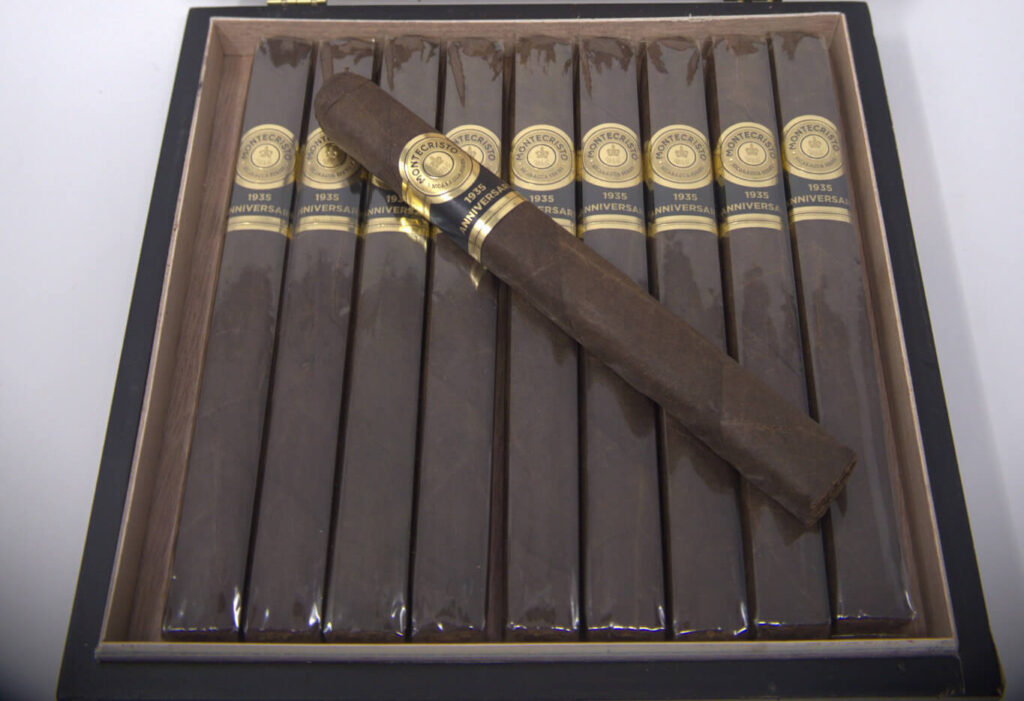
  • Maduro (Dark Brown/Black) – Sweeter, richer, often chocolatey.
  • Oscuro (Almost Black) – Bold, powerful, for experienced smokers.

Burton Tip: Darker doesn’t always mean stronger – it’s all about the blend.

How to Cut, Light & Smoke Like You Know What You’re Doing

Cutting Your Cigar

You don’t just bite off the end like in the movies. Use a cutter (hyperlink to cutters for sale in Burton’s e-comm) and try one of these methods:

  • Straight Cut – The most common, using a guillotine cutter to slice off the cap.
  • Punch Cut – A small hole in the cap, making for a more concentrated draw.
  • V-Cut – A wedge-shaped cut that gives a deep draw with good airflow.

Lighting It Up

  • Use a butane torch (hyperlink to lighters for sale in Burton’s e-comm) or wooden matches. Avoid lighters with regular fluid (they affect the taste).
  • Toast the foot first, holding the flame just below it.
  • Take slow puffs as you rotate the cigar, making sure it lights evenly.

How to Smoke a Cigar (Without Coughing Up a Lung)

  • Do not inhale. Cigars aren’t cigarettes! Draw the smoke into your mouth, savor it, and exhale.
  • Take your time. A cigar offers a smoking experience that is meant to be enjoyed slowly. Puffing too fast overheats the tobacco, making it bitter.
  • Ashing? Let it build up a bit. A long ash actually keeps the cigar burning cool.

Bonus Terms to Impress Your Friends

Still with us? Here are some extra cigar terms that’ll make you sound like a pro:

  • Retrohale – Exhaling smoke through your nose to pick up more flavors.
  • Draw – How easily the cigar pulls smoke when you puff.
  • Plume – A fine white dust that forms on cigars over time, which is a sign of proper aging (not mold!).
  • Tunneling – When a cigar burns unevenly, leaving a hollow center.

Wrapping It Up (Pun Intended)

Now that you know the basics, you’re ready to start your cigar journey with confidence. Don’t stress about getting everything perfect – cigar smoking is about enjoyment, not perfection.

Want to put your new knowledge to the test? Check out our curated selection of beginner-friendly cigars and find the perfect stick to start with.

What other cigar terminology questions do you have? Let us know in the comments!